Stop here, take a break
Guilty, I was always the one trying to pull people away from their computers and take a break, and honestly in a lot of environments it felt almost hostile, like messing with the productivity people are being paid for. It felt like the right thing to do though; the best ideas tend to arrive after stepping away.
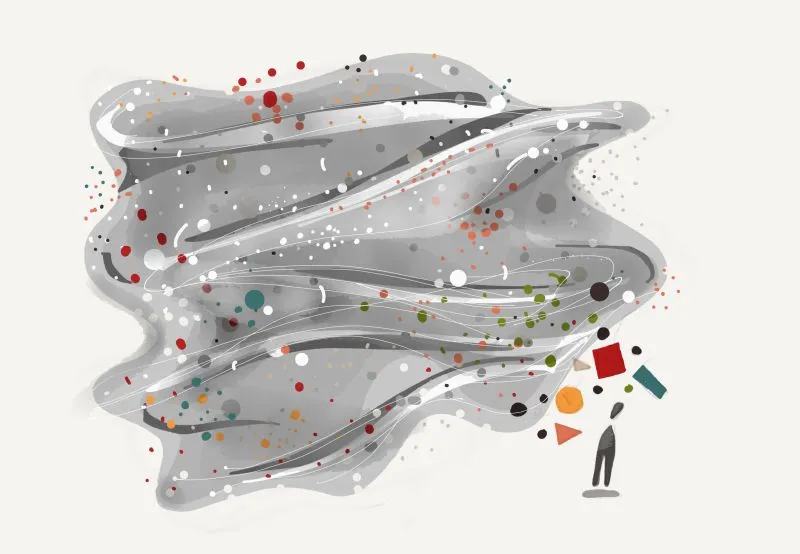
There’s an explanation for this that I find incredibly reassuring. The brain runs two major networks: the executive network - focused, verbal, task-oriented, what we sell as billable hours - and the default network, which kicks in the moment we step away. The default network is subconscious, bodily, associative, extremely fast and virtually uncontrollable, and it keeps spinning the problem even when we think we’ve stopped working on it (how would you bill that?). We focus and we’re executive, we switch away and we’re default, but we’re still working and the body is processing spatial relationships, emotional associations, half-forgotten references and quirky connections.
Stepping away from the task is a first step toward design methodology, whether we know it or not.
The default network comes back with a feeling, a pull toward something. And if there’s a framework to catch what it’s offering, some kind of documentation of where the project stands, what’s been tried, what felt promising and what we’re trying to achieve – the return is faster and sharper. Hmm, some may even call it more productive – intuition as a system.
Now how do we square AI into this rhythm? Maybe in summarizing, aggregating, bookkeeping of the executive network, so that when the default network hands us something, it does it in a structured way? Maybe, in helping to structure the work, creating the framework where voids are filled with time for our default network to process – so called “take a break” 😊
Going to take ten and think about it.